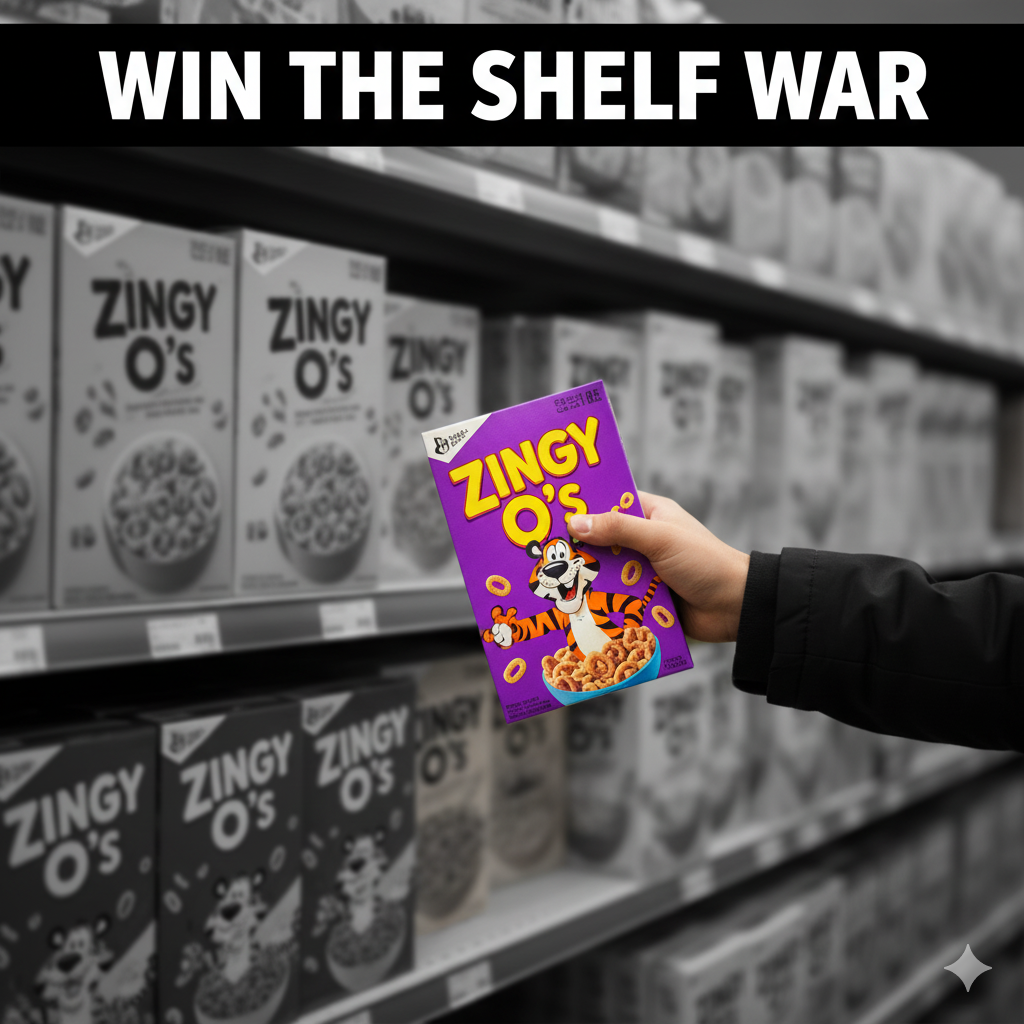
Packaging Design and Supply
Table of Contents
-
Industry Context: Why 2025 changed the game
-
Services & Capabilities across packaging design and supply
-
Scorecard: 12 evaluation points before you approve
-
Process: Strategy → CAD dieline → Prepress → Procurement → Print
-
Visual System & Information Hierarchy
-
Compliance & Risk Controls (non-legal, high-level)
-
Print Methods, Materials & Finishes
-
E-commerce Readiness (thumb → PDP → unboxing)
-
Sustainability that’s real (not greenwashing)
-
Common Mistakes & Quick Fixes
-
Files, Color & Prepress (what printers need)
-
Timelines, MOQs & Cost Levers
-
Hire CTA + Internal Portfolio Links
Industry Context: Why 2025 changed the game
-
Compressed launches: DTC and marketplace listings demand photo-ready packs and instant repeat runs.
-
Input volatility: Board, film, and ink costs swing; dual-sourcing and standard specs reduce exposure.
-
Data-first operations: COA scans, barcode grading, and color ΔE reports are normal QC artifacts, not nice-to-haves.
-
Sustainability pressure: Regulators and retailers prefer mono-material choices, recycled content, and recyclability claims with proof.
-
Global logistics: Lead times depend on port congestion and holidays—your spec must allow regional equivalents without brand drift.
Services & Capabilities across Packaging Design and Supply
-
Brand & pack architecture: SKU hierarchy, naming, color system, size logic.
-
CAD dielines: cartons, sleeves, labels, pouches, tubes, bottles, inserts, shippers.
-
Material engineering: SBS/FBB, corrugate grades (E/B flute), films (BOPP/PET/PE), closures (CR), barrier needs (MVTR/OTR).
-
Prepress governance: bleeds (≥3 mm), trapping (0.08–0.12 mm), overprint/knockout maps, Pantone LAB targets.
-
Vendor sourcing: RFPs, sampling, press trials, supplier scorecards, service-level terms.
-
Quality operations: barcode grading A/B, ΔE ≤ 2.0, security labels, serialization windows.
-
Logistics: pallet patterns, carton ECT/BCT checks, cube optimization, export docs.
-
Sustainability road-mapping: mono-material redesigns, caliper right-weighting, coatings, take-back/QR leaflets.
Scorecard: 12 evaluation points before you approve
-
Front-panel hierarchy: brand → product → variant/strength → net contents.
-
Barcode & QR: quiet zone ≥ 2.5 mm; 99% scan pass; QR leads to verified page.
-
Color control: Pantone masters with ΔE ≤ 2.0; proofs signed with readouts.
-
Die accuracy: fold/glue tolerances fit filling equipment; no choke points.
-
Bleed & safety: bleed ≥ 3 mm; safety 3–5 mm; small type knocks out (no overprint).
-
Material spec: board/film meets compression, scuff, and barrier needs.
-
Tamper/CR: clear instructions with icons; perforation or induction seal verified.
-
E-comm legibility: strength/variant readable at 120–160 px thumbnails.
-
Compliance copy: all mandatory fields present (batch/expiry, warnings).
-
Sustainability: mono-material where possible; end-of-life icons honest.
-
Palletization: master carton pass drop/stack tests; efficient cube.
-
Supplier readiness: at least two approved vendors with matched specs.
- 3D Renderings for your Product
Process: Strategy → CAD Dieline → Prepress → Procurement → Print
-
Strategy & brief
-
Audience, channels (retail vs DTC), volumes, regions.
-
Competitive shelf and thumb tests.
-
-
Content matrix
-
Lock exact text order: claims, legal, ingredients, compliance icons.
-
Pre-count character limits to prevent last-minute reflows.
-
-
Visual system
-
12-column grid, type scale (headline/body/captions), icon family, color logic by variant.
-
-
CAD & mechanics
-
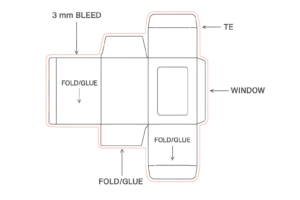
Build dielines with 3 mm bleed, 5 mm safety, glue areas, TE features, hang holes, window options.
-
Validate on machinery (cartoner, labeler, shrink).
-
-
Prototype & testing
-
White dummy + printed comps; drop tests; scuff tests with common shipper rubs.
-
-
Prepress
-
Raster at 300 ppi @100%, line art 1200 ppi.
-
Trapping 0.08–0.12 mm where inks meet; small text = knockout.
-
Overprint only for rich blacks/registration marks; never on tiny type.
-
Barcodes at spec magnification; quiet zones reserved.
-
-
Procurement & vendor set-up
-
Issue RFQs with print run splits; require press OK and ΔE report.
-
Lock ALT materials (e.g., FBB↔SBS) with tolerance table.
-
-
Press & QC
-
Approve wet proofs; collect ΔE, barcode grade, coating weight.
-
In-line serialization/UID windows tested in RIP.
-
-
Inbound & fulfillment
-
Master carton labels with SKU, LOT/EXP, QR to spec sheet; pallet patterns optimized.
-
-
Reorder & change control
-
Versioning: update logs, archive master PDFs, notify all vendors of new rev.
Visual System & Information Hierarchy
-
Top zone: brand mark and product class.
-
Primary signals: variant/strength badge, count/volume, RTBs (key benefits).
-
Secondary: usage icons, certifications, disposal guidance.
-
Tertiary: ingredients table, nutrition/actives, legal line, batch/expiry windows.
-
Color & contrast: avoid color-only differentiation; pair with pattern or icon; contrast ≥ 4.5:1 for body text.
-
Micro-layout: barcodes away from folds/edges; keep 6–8 mm from carton edge.
Compliance & Risk Controls (non-legal, high-level)
-
Maintain a master controlled copy and version history.
-
Don’t overclaim sustainability; tie claims to standards or recycled content % that you can prove.
-
Reserve UID/serialization space even if not used at launch.
-
Child-resistance and tamper instructions must be icon-led and near the opening zone.
-
Keep QR links live for at least 24 months post-batch date.
(Guidance only—confirm with your regulatory counsel.)
Print Methods, Materials & Finishes
-
Litho offset: folding cartons, inserts; crisp text and color fidelity.
-
Flexo: labels, corrugate; efficient at volume.
-
Digital (HP Indigo/inkjet): low MOQs, variable data, pilots.
-
Materials:
-
SBS/FBB 300–400 gsm for premium cartons.
-
Corrugate E/B flute for shippers; ECT 32+ as needed.
-
Films: BOPP, PET, PE; laminate for barrier where required.
-
-
Finishes: aqueous (matte/satin), soft-touch sparingly, spot gloss on non-critical areas, cold foil for accents, emboss/deboss aligned with board grain.
-
Security: UV inks, microtext on seams, tamper tapes.
E-commerce Readiness (thumb → PDP → unboxing)
-
Thumbnail: variant/strength readable at 120 px; simple background; no tiny claims.
-
PDP gallery (6–8 images): hero, side with info table, macro of finish, scale in hand, backside with barcode/QR, sustainability panel, pack-in-box shot.
-
Unboxing: one insert or inside-lid print for quick-start; QR to usage/how-to; avoid loose leaflets if QR suffices.
-
Color honesty: match ΔE to physical pack; avoid oversaturation that misleads.
Sustainability that’s real (not greenwashing)
-
Right-weighting: optimize caliper; remove unnecessary inserts.
-
Mono-material: paper tray instead of plastic where protection allows.
-
Coatings: water-based over plastic laminations unless barrier needed.
-
Design for disassembly: avoid glued mixed materials; clear consumer instructions.
-
Claims discipline: print recycling logos applicable to your markets only; link QR to disposal guide by region.
Common Mistakes & Quick Fixes
-
Artwork doesn’t fit machinery → Re-check tuck flaps, glue tabs; add chamfers on tight folds.
-
Barcode fails at DCs → Increase contrast, move off seam, enforce quiet zone, re-grade to A/B.
-
Overprint on fine text → Force knockout ≤8 pt; audit overprint preview.
-
Color drift across vendors → Single color bible; press OK at each plant; ΔE ≤ 2.0.
-
Crushed corners on shippers → Upgrade to B flute or raise ECT; improve pallet wrap pattern.
-
Late material swaps → Pre-approve ALT spec with tolerance ranges and visual sign-off.
Files, Color & Prepress (what printers need)
-
PDF/X-1a or X-4 finals, fonts outlined; include a live, editable source in archive.
-
Layers: dieline, fold, glue, varnish, foil, emboss, white ink, security—separate and named.
-
Bleed ≥ 3 mm; safety 3–5 mm; no critical text near creases.
-
Images 300 ppi; line art 1200 ppi; total ink limit per press profile.
-
Pantone with LAB values; rich black (e.g., C60 M40 Y40 K100) only for large areas, not small type.
-
Barcode spec (UPC/EAN): height, magnification, location; quiet zone fixed.
-
Preflight report: color spaces, overprint flags, font embedding, image resolution, trim box.
Timelines, MOQs & Cost Levers
-
Strategy + system: 1–2 weeks.
-
CAD + comps: 5–7 days.
-
Prepress + proofs: 3–5 days.
-
Printing: digital 3–5 days; offset 10–14 days incl. drying.
-
MOQs: digital 100–500; offset 5k–20k; flexo labels 5k+.
-
Levers: unify board calipers, standardize colors, gang runs, simplify tooling (shared dies), carton footprints aligned to pallet patterns, localize art not structure.
Hire Us + Internal Portfolio Links
Want packaging design and supply without firefighting? We build a production-ready system, vet vendors, and deliver QC that scales. Chalo, ship with confidence.
-
Supplements & label systems:
https://usmandesigner.com/portfolio/supplement-label-design-freelancer/ -
High-fidelity consumer packs & renders:
https://usmandesigner.com/portfolio/vape-packaging-design-store/ -
Complex carton craftsmanship & dielines:
https://usmandesigner.com/portfolio/sushi-packaging-design/FAQs
1) What’s the minimum info a retail pack must show?
Brand, product, variant, net contents, legal/mandatory fields, barcode, and a batch/expiry or lot area if relevant to your category.2) How do I keep color consistent across vendors?
Use Pantone masters with LAB references, sign wet proofs, enforce ΔE ≤ 2.0, and keep a color bible shared in every PO.3) When should I choose digital vs offset?
Digital for pilots/low MOQs/variable data; offset for steady SKUs at volume with stricter unit cost.4) What’s the simplest way to improve barcode passes?
Increase contrast, protect quiet zones (≥2.5 mm), avoid varnish underneath, and grade to A/B before print approval.5) Can I make my pack more eco-friendly without retooling?
Yes: reduce caliper, switch to water-based coatings, standardize mono-material trays, and print disposal guidance with a QR to regional instructions.6) How do I avoid crushed corners in transit?
Use correct flute/ECT, test pallet wrap patterns, add corner protectors, and optimize master carton orientation.7) What’s the fastest route from concept to shelf?
Lock the content matrix early, build a reusable master dieline, pre-approve two vendors, and run a short digital pilot before offset scale-up.