Net Packaging Design: Why Breathability and Visibility Are Non-Negotiable
Table of Contents
- Introduction: The Transparent Choice in Packaging
- The Core Function: Breathability and Shelf Life
- Material Evolution: From Polypropylene to Cellulose Nets
- Structural Advantages: Protection Without Condensation
- The Branding Challenge: Maximizing Minimal Label Space
- Technical Requirements: Sealing, Strength, and Automation
- The Sustainability Imperative: Choosing the Eco-Net
- Net Packaging for Non-Produce Items (Beyond Onions)
- Frequently Asked Questions (FAQs)
- The Net Packaging Scorecard
- Conclusion: The Power of Openness
Introduction: The Transparent Choice in Packaging
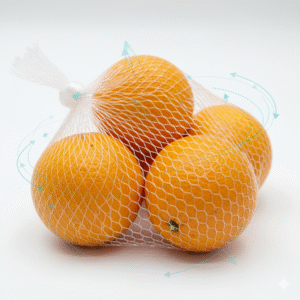
Net packaging design—often seen for fresh produce like onions, potatoes, and citrus fruits—is a highly specialized segment where the container’s function is defined by its ability to not contain completely. Unlike the high-graphic world of retail boxes, net packaging prioritizes visibility (allowing the consumer to inspect the contents) and breathability (extending the product’s shelf life). For a designer, this is a technical challenge: how do you build a strong brand presence when most of the packaging is air and open mesh, yaar?
The Core Function: Breathability and Shelf Life
The mesh structure is a scientifically proven method for protecting perishable goods:
- Ethylene Gas Release: Fresh fruits and vegetables naturally release ethylene gas, which accelerates ripening. Sealed plastic bags trap this gas, speeding up spoilage. Net packaging allows the gas to disperse freely, significantly delaying decay.
- Condensation Control: The open structure prevents moisture and condensation buildup inside the bag, which is the leading cause of mold, rot, and spoilage for items like potatoes and garlic.
- Consumer Trust: The high visibility allows consumers to quickly assess the quality and freshness of the product, fostering trust and encouraging the purchase.
Material Evolution: From Polypropylene to Cellulose Nets
The materials used for net packaging are changing rapidly due to environmental pressure:
Structural Advantages: Protection Without Condensation
While it looks simple, the structural design of net packaging ensures both logistical ease and product protection:
- Non-Abrasive Mesh: High-quality nets are designed to be soft and non-abrasive (like Knitted Nets), ( Hire a 3D Artist ) preventing skin damage or bruising on delicate fruits like oranges or avocados.
- Load Strength: The net must be strong enough to contain the product without stretching or tearing, accommodating weights up to 5kg or more for bulk items like potatoes.
- Automation Ready: Many commercial nets are supplied on rolls for Vertical Form Fill and Seal (VFFS) machines, requiring precise material thickness and sealing properties.
The Branding Challenge: Maximizing Minimal Label Space
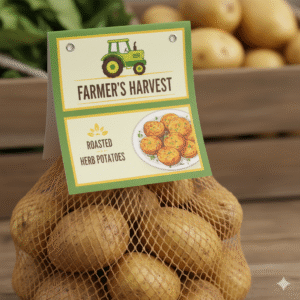
Since the net itself is transparent, all branding efforts must be concentrated on the minimal label space, usually a header card or a snap-on label.
- The Header Card: This is the prime advertising space. Brands use high-resolution Flexographic Printing on a paperboard header to communicate brand story, recipe ideas, and key benefits.
- Non-Adhesive Labels: These snap-on labels are critical for displaying variable data like the UPC barcode, weight, and price without obstructing the product view.
- Color Coding: Using brightly colored mesh (red for apples, yellow for onions) can provide instant product differentiation on the shelf.
Technical Requirements: Sealing, Strength, and Automation
Designers must work closely with the packing house to ensure the following technical needs are met:
- Tear Resistance: The seals (often heat-sealed or closed with metal clasps/drawstrings) must be durable and tamper-evident.
- Mesh Size and Weight: The specific mesh size and thread thickness must be chosen based on the size and weight of the produce to ensure contents do not spill or tear the bag.
Portfolio Showcase: Packaging Design Excellence
See how our strategic designs create unique market positions and measurable impact for our clients: