Breaking Down the Cost for Packaging Design: Budgeting Your Brand Investment
Table of Contents
- Introduction: Cost vs. Value—The Budgeting Mindset
- The Core Formula: What Drives the Cost for Packaging Design?
- Pricing Models: Hourly, Project-Based, and Agency Fees
- Hidden Costs: The Expenses Clients Often Forget
- The Structural Chakar: Why Die-Lines Increase Cost
- The SKU Multiplier: Managing Product Variations
- The Material Factor: Special Finishes and Print Complexity
- Strategies to Control and Optimize Your Design Budget
- Frequently Asked Questions (FAQs)
- The Packaging Cost Scorecard
- Conclusion: The Smart Investment That Pays for Itself
Introduction: Cost vs. Value—The Budgeting Mindset
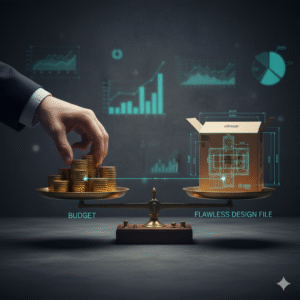
When analyzing the cost for packaging design, it’s essential to move beyond the idea of an expense and see it as a strategic investment. A professional design does more than make your product look good; it reduces manufacturing errors, increases shelf appeal, and drives a higher perceived value—all of which directly impact your revenue. The ultimate cost depends on the scope of work, but understanding why these costs exist is the first step toward smart budgeting. The truth is, the cheapest design is often the most expensive one when it fails at the printing press or on the shelf, yaar.
The Core Formula: What Drives the Cost for Packaging Design?
The final cost for packaging design is determined by three interconnected factors:
- Scope and Complexity: How intricate is the structural design (the box shape)? Does it need special materials or multiple components? Complexity increases the required expertise and time.
- Service Provider Experience: Are you hiring a freelance entry-level designer, an experienced professional (like those at Frameaxe.com), or a full-scale agency? The rate scales with proven track record and risk mitigation.
- Deliverables and Technical Needs: Does the project require just a single logo placement, or a full suite of services, including die-line creation, 3D visualization, and detailed CMYK print-ready files for five different SKUs?
Pricing Models: Hourly, Project-Based, and Agency Fees
Design professionals typically charge using tiered models:
Hidden Costs: The Expenses Clients Often Forget
The quoted price from a designer often only covers the artwork. Smart budgeting accounts for these often-forgotten, hidden costs:
- Licensing Fees: Paying for premium fonts, stock images, or unique icons used in the design.
- Prototyping and Mockups: Creating high-fidelity, physical samples of the final package for testing before mass production.
- Source Files: Some basic or low-cost gigs do not automatically include the editable vector files (AI/EPS). Always ensure these are included, or budget to buy them separately.
- Revisions: If the contract includes only 1-2 rounds of revisions, every change afterward will be charged at the designer’s hourly rate.
The Structural Chakar: Why Die-Lines Increase Cost
This is a technical area that significantly drives the final cost for packaging design.
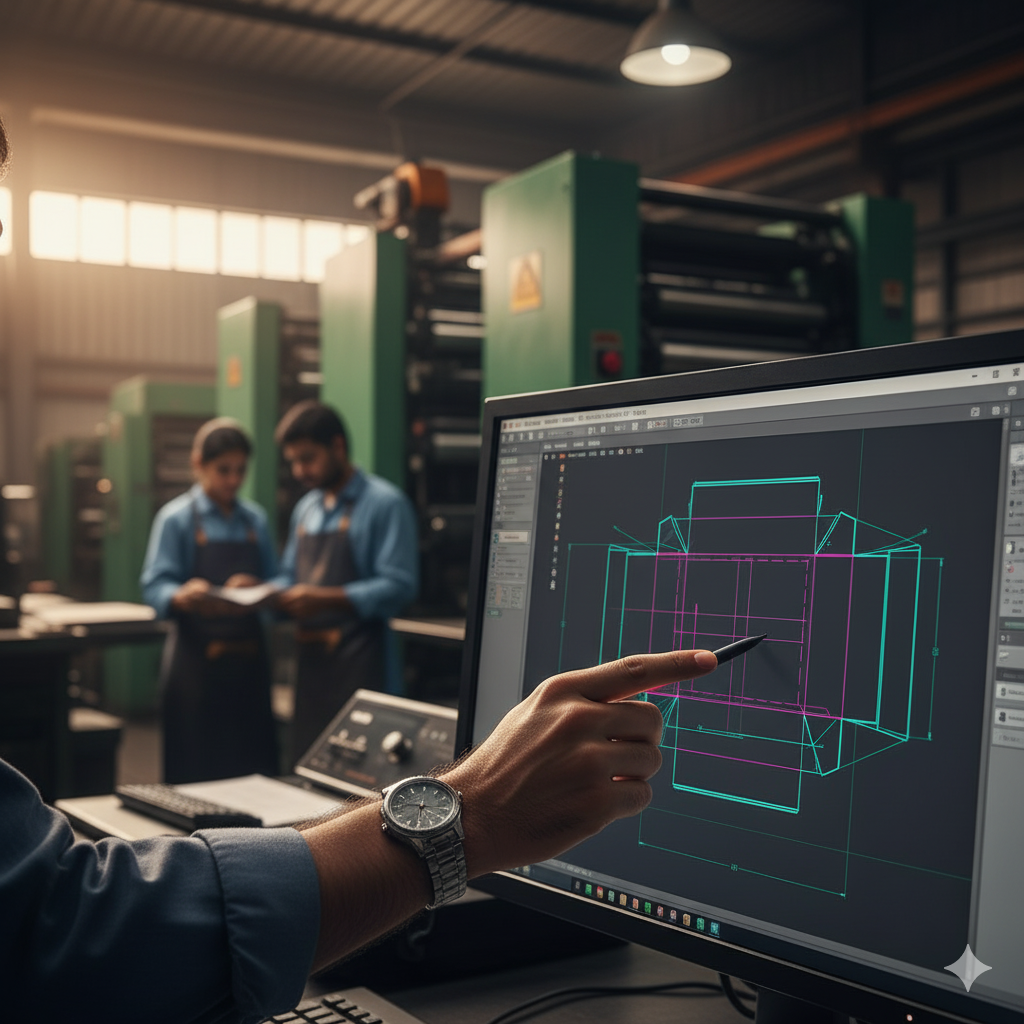
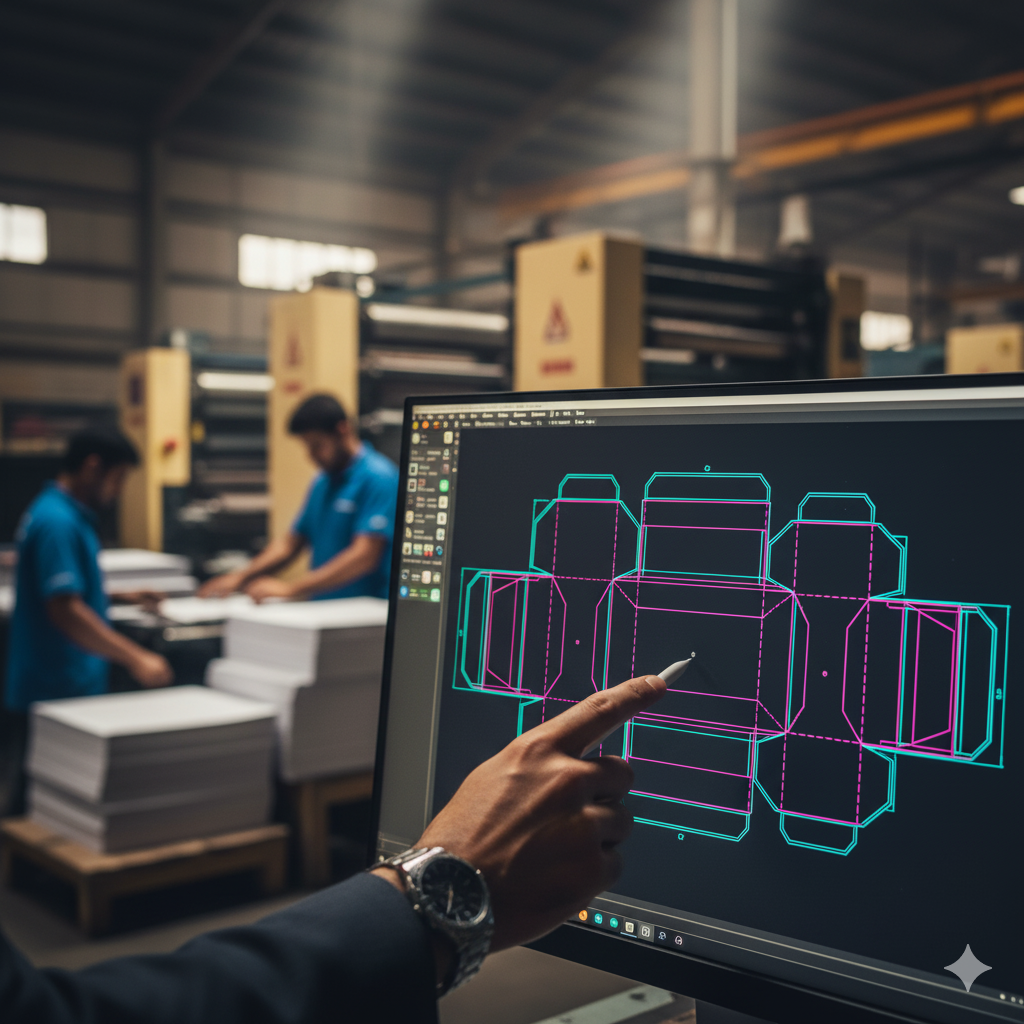
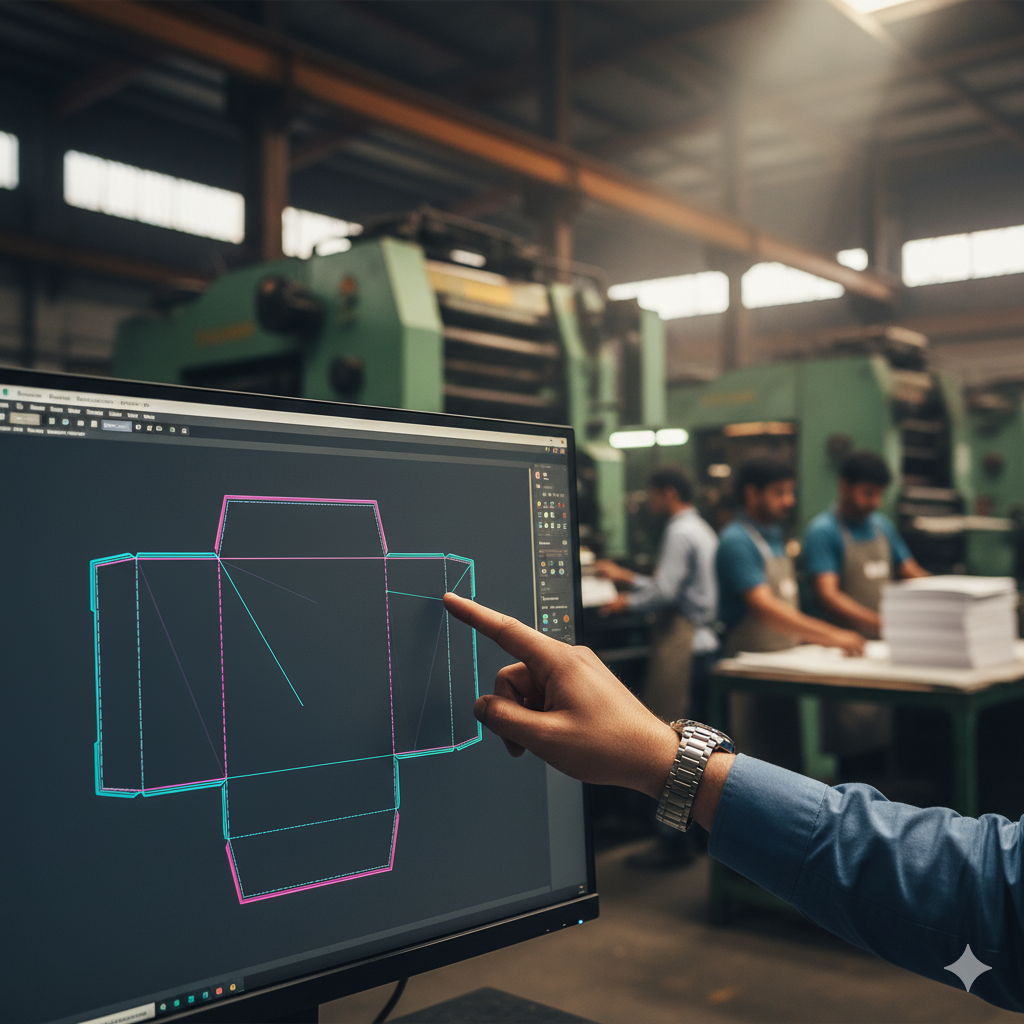
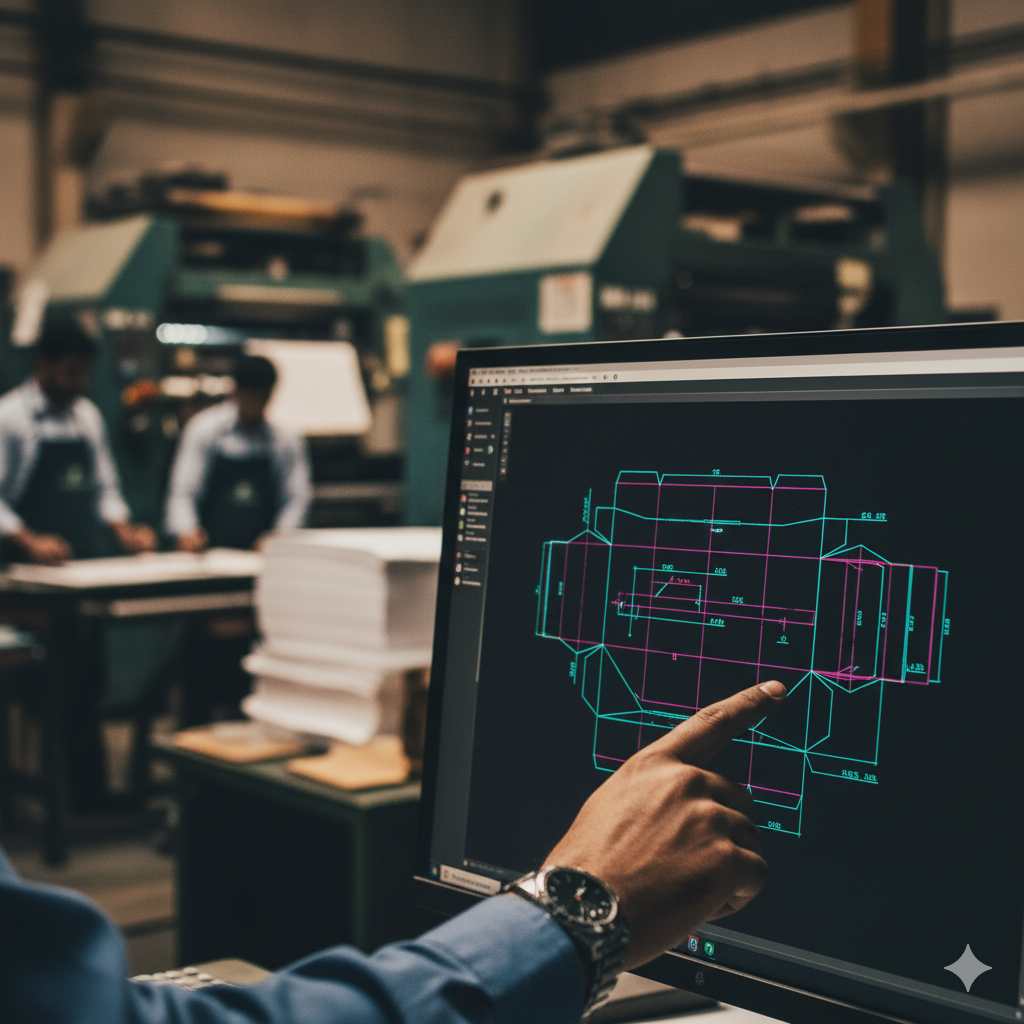
- Standard vs. Custom Die-Line: If your product uses a generic box size with a ready-made die-line (the blueprint for cutting the box), the cost is lower. If the designer has to engineer a unique structural design (a custom shape, a unique opening mechanism, or specialized inserts), the cost increases substantially due to the added time, software, and expertise required for 3D modeling and structural testing.
- Risk Mitigation: The designer is essentially charging for the certainty that the package will fold correctly and protect the product—an essential investment against expensive manufacturing errors.
The SKU Multiplier: Managing Product Variations
The number of unique SKUs (Stock Keeping Units) is a direct multiplier of the cost. Designing one product (e.g., a lemon tea box) is cheaper than designing ten variants (lemon, peach, mint, ginger, etc.). Even if the core graphics are consistent, each SKU requires:
- Unique legal/nutritional text placement.
- Separate CMYK color calibration and technical file setup.
- Final quality control and proofing for every single print file.
Strategies to Control and Optimize Your Design Budget
You can get high value without overspending by being smart about the brief:
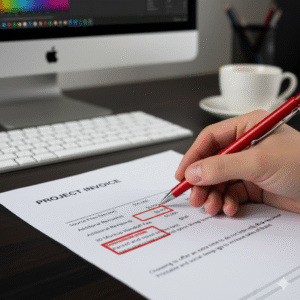
- Pre-Define Everything: Before approaching a designer, clearly define your CMYK color codes, logo variants, all text copy, and your manufacturer’s die-line specs. Clarity minimizes costly revision rounds.
- Limit Finishes: Specialty finishes like embossing, foiling, and spot UV look premium but are expensive both to design and to print. Use them strategically.
- Bundle SKUs: Negotiate a better project-based fee by packaging multiple SKUs (like a whole product family) into a single contract.
Portfolio Showcase: Packaging Design Excellence
See how professional expertise gets the basic fundamentals right—ensuring flawless printing and strong brand communication: