Best Packaging Design Companies: How to Find, Vet & Hire a Partner That Ships
If you’re googling “best packaging design companies,” you’re not hunting for pretty mockups—you want a partner that translates strategy into structure, turns claims into a clear front panel, and hands off press-ready files that perform on shelf and at 120×120 px online. This guide gives you a practical scorecard, a step-by-step selection workflow, pricing/timeline realities, red flags, image prompts, FAQs, and complete Rank Math data.
Table of Contents
-
What “Best” Really Means (and how to measure it)
-
The Scorecard (use this to rank agencies)
-
Services World-Class Firms Deliver (end-to-end)
-
Specializations by Industry (pick depth, not hype)
-
Shortlist & Selection Workflow (steal this)
-
Pricing & Timelines (what moves the needle)
-
E-commerce Readiness (thumbnail → unboxing)
-
Sustainability Without Green-washing
-
Red Flags (walk away when you see these)
-
Mini Case Snapshots (portfolio tone)
-
Image Prompts (hero, grid, eco, dieline, “top list”)
-
FAQs
-
Rank Math Data (Copy-Paste)
1) What “Best” Really Means (and how to measure it)
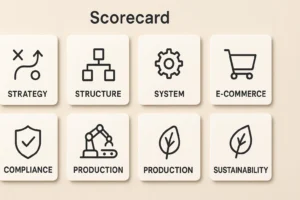
The best packaging design companies connect four pillars:
-
Strategy: positioning, audience triggers, claim architecture (one headline + 2–3 proofs).
-
Structure: dielines, materials, barriers (OTR/WVTR), closures, shipping realities.
-
Visual System: type pairing, color logic, iconography, imagery style, modular grids.
-
Production: compliance (nutrition/INCI/allergens), prepress setup, printer liaison, proofs, and e-commerce assets.
“Best” isn’t awards—it’s repeatable outcomes: packs that are compliant, legible in 5 seconds, and scalable across SKUs without redesign chaos.
2) The Scorecard (use this to rank agencies)
Give each candidate a 0–5 score per line, then add up to 100%.
-
Strategic clarity (20%) – Do they compress your promise into a repeatable headline + proofs?
-
Structure literacy (20%) – Can they discuss dielines, barrier films, closures, and freight?
-
System thinking (15%) – Will new SKUs slot in without breaking the design?
-
E-commerce readiness (15%) – Thumbnail legibility at 120×120 px, gallery logic, consistent hero angles.
-
Compliance discipline (15%) – Nutrition/INCI, allergens, barcodes, certs, translations planned early.
-
Production hygiene (10%) – CMYK/spot strategy, trapping/overprint, barcode tests, proof flow.
-
Sustainability insight (5%) – Right-sizing, mono-materials, honest end-of-life guidance.
Shortlist your top two; run a paid concept test if you’re torn.
3) Services World-Class Firms Deliver (end-to-end)
-
Category & shelf audit – what to respect vs. break; whitespace to own
-
Structure & dielines – vendor-ready with assembly notes; inserts/closures considered
-
Materials & barriers – paperboard/kraft, laminates tuned to OTR/WVTR, glass/metal, MAP/vacuum
-
Visual territories – benefit-first fronts, variant color logic, icon grid, imagery/3D style
-
Compliance & localization – nutrition/INCI, allergens, barcodes, batch/lot, certs, translations
-
Prepress & production – color management, trapping/overprint, barcode sizing, proofs, first-article checks
-
E-commerce kit – consistent hero angles, angled back, lifestyle, in-hand scale, short unboxing GIF
-
Versioning & extensions – seasonals, multipacks, retailer stickers—without breaking the system
4) Specializations by Industry (pick depth, not hype)
-
Food & Beverage: barriers, grease/moisture, nutrition/allergens, pasteurization/condensation survivability
-
Supplements/Nutraceuticals: INCI, claims discipline, batch/lot space, tamper cues
-
Cosmetics/Personal Care: INCI hierarchy, tactile finishes, shelf + vanity appeal
-
Vape/CBD/Novelty: high-contrast systems, regulation-aware visuals
-
Home/Lifestyle: giftability, set architecture, sustainable shippers
Explore tone/examples:
-
Food: Sushi Packaging Design
-
Supplements: Dog Supplement Label Design
-
High-impact variants: Vape Packaging Design Store
-
Candy tone: KickBallz Packaging
5) Shortlist & Selection Workflow (steal this)
-
Search with intent: “best packaging design companies” + your category/city.
-
Portfolio triage: prioritize recent case studies and before/after legibility.
-
Request proof of production: one sanitized press-ready PDF and a PDP image kit.
-
Interview with the scorecard: test structure literacy, compliance plan, and thumbnail logic.
-
Mini paid pilot (optional): 1 SKU, two territories, one refinement round; evaluate file hygiene and communication.
-
Vendor alignment: confirm they’ll liaise with printers and approve first articles.
-
SLA & ownership: response times, rounds, timeline, and source file/IP ownership in writing.
Questions to ask: “What happens if a barcode fails?”, “How do you handle multi-language packs?”, “Show your color management & proof process.”
6) Pricing & Timelines (what moves the needle)
-
Typical timeline: 3–8 weeks, faster for a single-SKU refresh, longer for multi-language/complex finishes.
-
Cost drivers: SKU/variant count, finish level (soft-touch/foil/spot UV), photography/3D depth, regulatory complexity, rush/retailer demands.
-
Smart savings: one base structure + variant labels; right-size packs; limit plate count; standardized render angles.
7) E-commerce Readiness (thumbnail → unboxing)
-
Front = poster. Big variant name, bold color band, three plain-language proof bullets.
-
PDP gallery: front hero, angled back (compliance), lifestyle, in-hand scale, short unboxing GIF.
-
Consistency: same camera angle/lighting across SKUs = trust and repeat buys.
-
3D first: photoreal renders unify a line pre-photo; swap hero images post-shoot.
8) Sustainability Without Green-washing
-
Right-size and reduce void/plate count.
-
Prefer mono-materials; design honest end-of-life icons (“recycle where facilities exist”).
-
Test finishes on actual stock; some foils/laminates affect recyclability.
-
Avoid vague “eco” claims; be specific and verifiable.
9) Red Flags (walk away when you see these)
-
Compliance is an afterthought (nutrition/INCI/allergens appear after design sign-off).
-
No talk of OTR/WVTR, closures, or freight—just “pretty.”
-
Barcodes resized casually; quiet zones ignored.
-
Prototype colors don’t match proofs; no color notes or profiles in handoff.
-
“We’ll fix it in post” on sleeve distortion or can seams.
10) Mini Case Snapshots (portfolio tone)
-
Food (carton + flow wrap): Reduced front clutter, enlarged flavor, standardized color bands → clearer thumbnails, fewer “what flavor?” chats.
See tone: Sushi Packaging Design -
Supplements (jar + label): Benefit headline + 3 trust icons; line scaled to 6 SKUs with zero redesign chaos.
Explore: Dog Supplement Label Design -
Vape (carton + device): High-contrast variant codes, consistent angles for stores/ads.
Reference: Vape Packaging Design Store12) FAQs
Q1. How many companies should I shortlist?
Two or three. Run a structured interview and, if possible, a mini paid pilot to compare process and file hygiene.Q2. Local vs. remote—does “near me” matter?
Proximity helps for samples/press checks, but category specialization and strong 3D/PDP workflows often beat location.Q3. Who owns the source files?
Clarify in the contract. You should own print-ready PDFs + layered source files after final payment.Q4. Will the firm manage printers and proofs?
The best ones do: color management, proofs, barcode tests, and first-article approvals.Q5. How long does it take?
Most engagements land in 3–8 weeks depending on SKUs, finishes, compliance, and vendor lead times.Q6. What should the final handoff include?
Press-ready PDFs on final dielines (1:1), outlined fonts, embedded images, CMYK/spot profiles, barcode scaled correctly, a locked Compliance Layer, 3D renders/PNGs, and a PDP image kit.Q7. How do I keep variants consistent at scale?
A style guide (colors, icons, grids, claim zones) + templates + a locked compliance layer.
Hire a Partner That Ships Results
Want strategy → structure → prepress → launch assets handled by one team? Start here: