Takeaway Packaging Suppliers
Table of Contents
-
Industry Context: Why 2025 is different
-
Services & Features you should expect
-
Scorecard: 12 evaluation points
-
Process (strategy → CAD dieline → prepress → print)
-
Visual System & Information Hierarchy
-
Compliance & Risk Controls (non-legal)
-
Print Methods, Materials & Finishes
-
E-commerce Readiness (thumbnail → PDP → unboxing)
-
Sustainability (real, not greenwashing)
-
Common Mistakes & Quick Fixes
-
Files, Color & Prepress (what printers need)
-
Timelines, MOQs & Cost Levers
-
Hire CTA + Internal Portfolio Links
Industry Context: Why 2025 is different
-
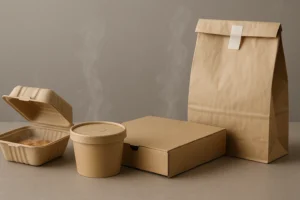
Delivery-first brands: Food travels further and features in app thumbnails—packs must resist steam, leaks, and crushing while looking sharp on camera.
-
Sustainability pressure: Real movement toward mono-material paper, water-based coatings, and credible disposal guidance—no vague claims.
- 3D Product: Rendering & Modelling
-
Speed & SKU sprawl: Seasonal menus and promos require modular dielines and fast variable printing.
-
Supply volatility: Board and film fluctuations mean dual-sourcing and standard specs across takeaway packaging suppliers.
-
Data & QC: Barcode/QR for batch and allergen info; ΔE color controls keep brand consistent across plants.
Services & Features you should expect
-
Menu-fit engineering: bowls, clamshells, trays, pizza boxes, pouches, labels, cup carriers, tamper seals.
-
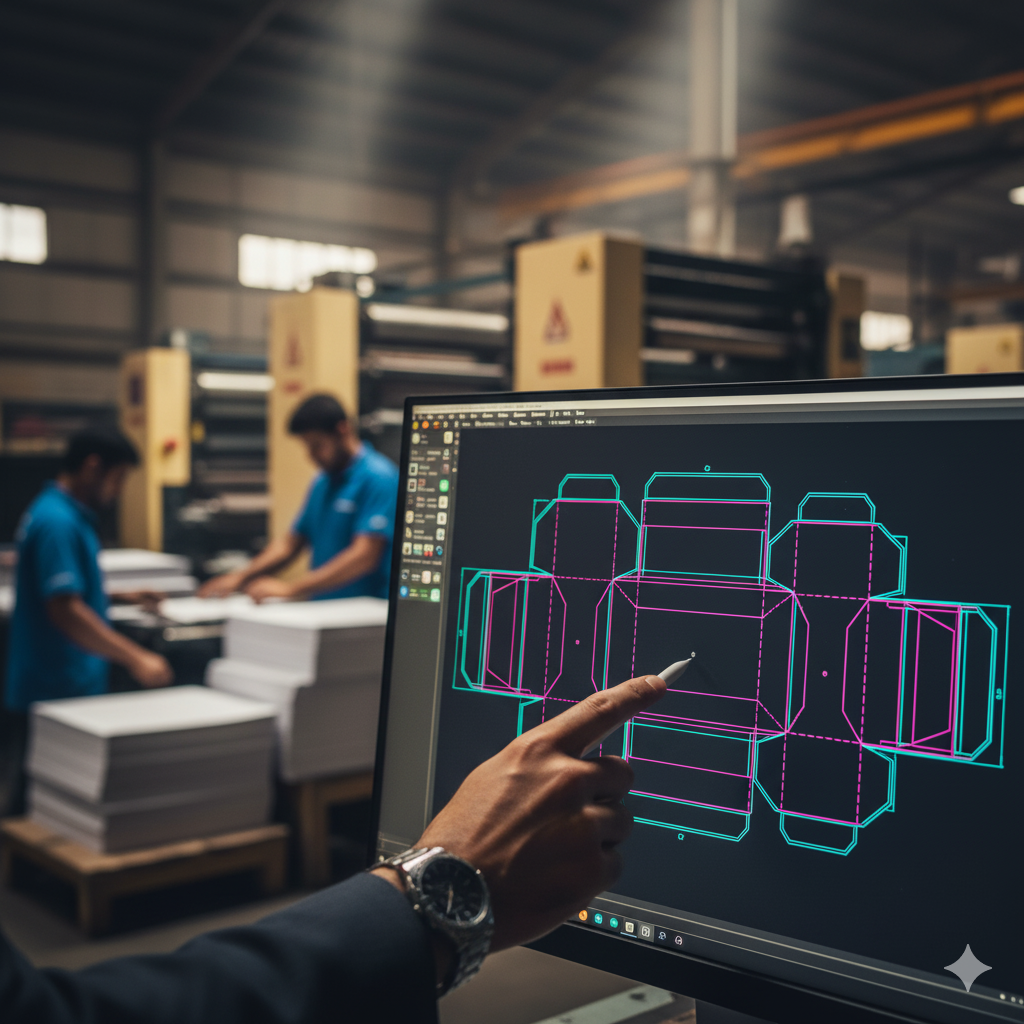
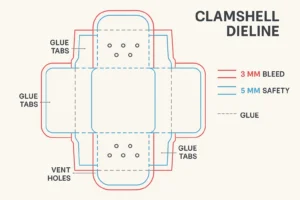
Master CAD dielines with ≥3 mm bleed, 3–5 mm safety, fold/glue/vent markers, and sauce compartments where needed.
-
Material guidance: SBS/FBB 300–400 gsm, corrugate (E/B flute) for pizzas, grease-resistant liners, microwavable films/labels.
-
Tamper-evident systems: seals, tear strips, label bridges for delivery apps.
-
Prepress discipline: trapping 0.08–0.12 mm, overprint/knockout rules, color books with Pantone + LAB, ΔE ≤ 2.0.
-
E-comm toolkit: photo angles, PDP spec sheets, QR codes to ingredients or reheat instructions.
-
Sustainability roadmap: recycled content, water-based coatings, mono-material swaps.
Scorecard: 12 evaluation points
-
Leak & steam management: vents where needed; liners that don’t sog breading.
-
Stackability: lids survive courier stacking; ECT/BCT for shippers verified.
-
Tamper evidence: seal strength + intuitive “lift/peel” arrows.
-
Heat/micro testing: safe in microwave/heat lamps (as applicable).
-
Barcode/QR readiness: quiet zone ≥ 2.5 mm; scan grade A/B.
-
Color control: Pantone + LAB targets; ΔE ≤ 2.0 to master proof.
-
Bleed & safety: ≥3 mm bleed, 3–5 mm safety; no critical text on creases.
-
Trapping/overprint: 0.08–0.12 mm trapping; small text (≤8 pt) set to knockout.
-
Food-contact sense: inks/coatings appropriate for contact/non-contact zones.
-
Sustainability claims: specific, provable (recycled %, certifications).
-
Lead time & surge plan: dual plants, backup materials, holiday buffers.
-
Cost transparency: board caliper, plate counts, finish costs, freight logic.
Process (strategy → CAD dieline → prepress → print)
-
Strategy & menu mapping
-
Portion sizes, wet/dry items, sides, sauces, delivery vs dine-in mix, app photography needs.
-
-
Content matrix
-
Lock mandatory copy: allergens, reheating/storage notes, recycling guidance, batch/expiry spaces.
-
-
Master system
-
12-column grid; iconography (vegan/halal/spicy/recycle/QR); color families by cuisine or range.
-
-
CAD & mechanics
-
Build modular dielines: burger clamshells with vent notches, salad bowls with lid fit, pizza boxes with cross-vent holes. Add ≥3 mm bleed, 5 mm safety, glue tabs, and carry-handle tests.
-
-
Prototypes & stress tests
-
Fill with real food; test leaks, condensation, stacking, and courier ride.
-
-
Prepress setup
-
Trapping 0.08–0.12 mm; rich black for solids only (e.g., C60 M40 Y40 K100); overprint/knockout map on pasteboard.
-
Barcodes/QR placed off folds; quiet zone ≥ 2.5 mm.
-
-
Color proofs
-
Pantone/LAB with ΔE readouts; reject beyond tolerance.
-
-
Press & line trials
-
Check cut accuracy, fold memory, lid snap, and coating scuff.
-
-
Go-live kit
-
Final PDFs, color bible, preflight, pallet patterns, and QC checklist for every reorder.
-
Visual System & Information Hierarchy
-
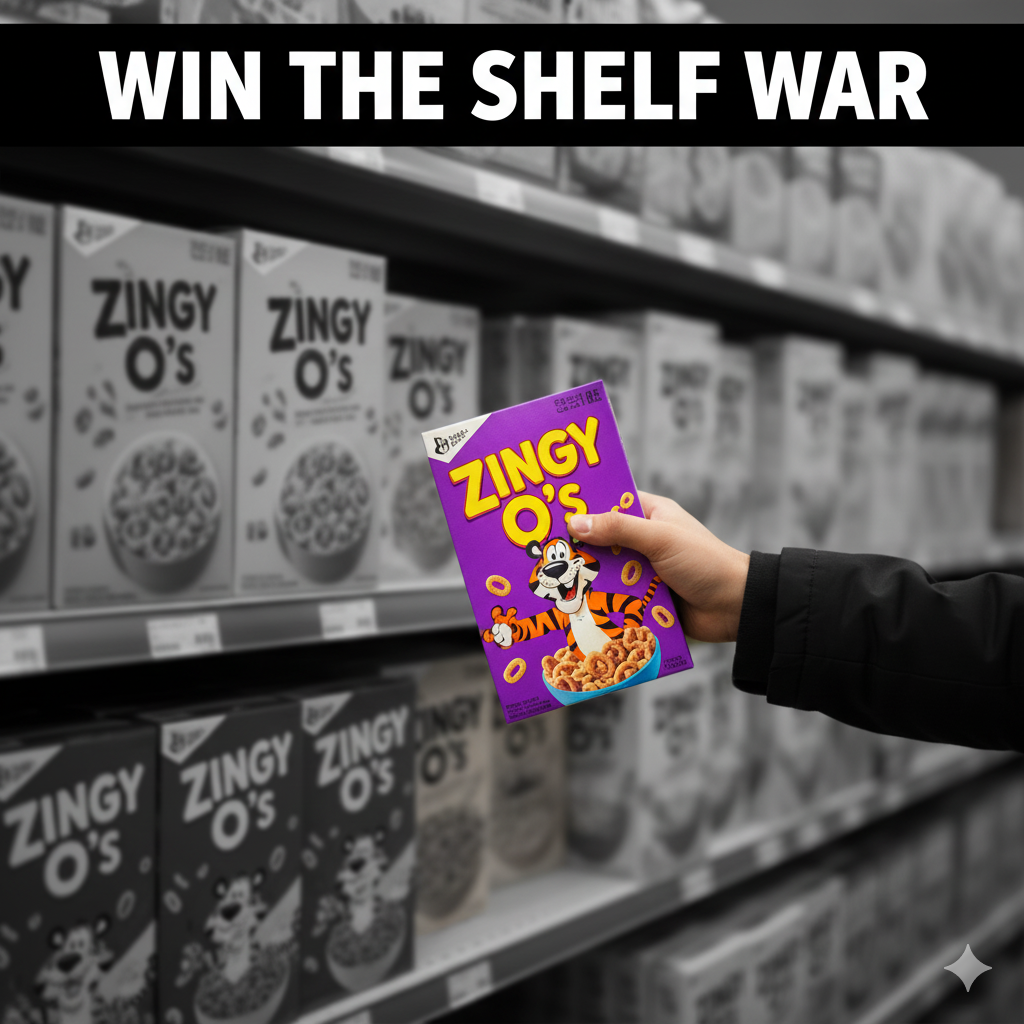
Front zone: brand mark + product name (e.g., “Chicken Biryani”), key RTB (Hot & Sealed).
-
Sides: allergen icons, reheating pictograms, disposal guidance.
-
Lid top: QR for menu, order tracking, or reheating video.
-
Color & contrast: maintain ≥ 4.5:1 for small copy; avoid color-only differentiation—pair with symbols.
-
Micro layout: keep codes 6–8 mm from edges/folds; don’t place over vents.
Compliance & Risk Controls (non-legal)
-
Keep a controlled master copy with versioning; date-code each art rev.
-
Use food-safe inks/coatings where contact occurs; avoid over-claiming sustainability.
-
Reserve variable data areas for batch/expiry/allergen labels.
-
Provide tamper instructions near seal path; don’t block them with finishes.
(Guidance only—confirm with your regulatory team.)
Print Methods, Materials & Finishes
-
Litho offset for graphic cartons/clamshells; flexo for corrugate pizza boxes; digital for promos/low MOQs.
-
Materials:
-
SBS/FBB 300–400 gsm for clamshells and trays.
-
Corrugate E/B flute for pizzas and meal kits (spec ECT 32+ as needed).
-
Grease-resistant liners; PE/PLA windows only when necessary (note recyclability impact).
-
-
Finishes: aqueous matte/satin (food-grade), soft-touch sparingly (scuff visibility), spot gloss away from safety text/codes.
-
Security: tamper labels, perforations; optional UV microtext on brand zones.
E-commerce Readiness (thumbnail → PDP → unboxing)
-
Thumbnail (120–160 px): readable product name or icon; avoid clutter.
-
PDP gallery (6–8 images): hero with food, macro of vent/lock, leak test, dieline blueprint with bleed/safety, QR placement, stack test.
-
Unboxing: step-by-step seal removal; reheating pictograms; QR to video.
-
Color honesty: renders must match print within ΔE tolerance—no oversaturation that misleads.
Sustainability (real, not greenwashing)
-
Right-weighting: trim caliper where compression allows; publish gram savings.
-
Mono-material structures: paper tray instead of plastic where possible.
-
Water-based coatings preferred over plastic laminations unless barrier is mandatory.
-
Disposal guidance: icons by region + QR to local instructions.
-
Claim discipline: recycled content % and certifications only.
Common Mistakes & Quick Fixes
-
Soggy fries / soggy crust → Add venting pattern; test hole size & placement.
-
Leaky curry bowl → Double-wall rim or snap-lid geometry; upgrade coating weight.
-
Barcode on fold → Move to flat panel; quiet zone ≥ 2.5 mm; re-grade scans.
-
Overprint on fine text → Force knockout for ≤8 pt; check overprint preview.
-
Color drift across plants → Share color bible, press OK at each plant, hold ΔE ≤ 2.0.
-
Seal confusion → Add “Peel here” arrows; ensure adhesive path is unprinted.
Files, Color & Prepress (what printers need)
-
Finals: PDF/X-1a or X-4, fonts outlined; embed profiles; source files archived.
-
Layers (non-printing): dieline, fold, glue, varnish, foil (if any), white ink, security, barcode/QR zones, overprint/knockout legend.
-
Bleed ≥ 3 mm; safety 3–5 mm; avoid micro type near vents/creases.
-
Images 300 ppi @100%; line art 1200 ppi; total ink limit per press profile.
-
Pantone governance: book name + LAB; ΔE ≤ 2.0 sign-off.
-
Barcode/QR: magnification, height, placement spec; quiet zone ≥ 2.5 mm; sample scans attached.
-
Preflight report: color spaces, overprints, fonts, resolution, trim/bleed boxes.
Timelines, MOQs & Cost Levers
-
Strategy + menu mapping: 3–5 days
-
CAD + comps: 5–7 days
-
Prepress + proofs: 3–5 days
-
Printing: digital 3–5 days; offset/flexo 10–14 days incl. drying & QC
-
MOQs: digital 250–1000; offset/flexo 5k–50k depending on format
-
Levers: shared dies, unified calipers, limit spot colors, gang runs, standardize seal labels, localize artwork not structure
Hire CTA + Internal Portfolio Links
Need reliable takeaway packaging suppliers with design + factory discipline? We’ll engineer your dielines, enforce color control, and set up dual-vendor supply—jaldi, without quality drama.
-
Label & supplement systems (regulated hierarchy discipline):
https://usmandesigner.com/portfolio/supplement-label-design-freelancer/ -
High-fidelity consumer packs & 3D visuals:
https://usmandesigner.com/portfolio/vape-packaging-design-store/ -
Premium cartons & complex dielines:
https://usmandesigner.com/portfolio/sushi-packaging-design/FAQs
1) What packs do takeaway packaging suppliers typically provide?
Clamshells, bowls with lids, trays, pizza boxes, paper bags, cup carriers, labels, and tamper seals tailored to your menu.2) How do I prevent leaks and sogginess?
Use correct coatings and lid geometry, add vent holes where needed, and prototype with real food before mass print.3) What should my print files include?
≥ 3 mm bleed, 3–5 mm safety, trapping 0.08–0.12 mm, overprint/knockout legend, Pantone/LAB targets, barcode/QR with quiet zone ≥ 2.5 mm.4) Are water-based coatings enough for greasy items?
Often yes with right weight; test with your actual dishes. For extreme grease, specify liners or specialty barriers.5) How do I keep color consistent across suppliers?
Maintain a color bible, sign wet proofs, and enforce ΔE ≤ 2.0 with every plant.6) Can I print sustainability claims?
Only if provable—state recycled %, certifications, and provide disposal guidance via QR; avoid vague “eco friendly.”7) What’s a sensible MOQ to start?
Digital pilots from 250–1000; move to offset/flexo for 5k–50k once specs are stable.